
And yet, compared with other Western European capitals like London, Paris or Madrid, Lisbon moves at a noticeably slower pace.
That isn’t necessarily a criticism. In fact, it’s part of Lisbon’s appeal. But visitors expecting the constant energy of Madrid or the seemingly endless list of things to see in Paris may find Lisbon surprisingly relaxed. It’s a city that rewards slowing down—wandering through neighborhoods, stopping for wine and seafood, listening to Fado and enjoying the view rather than racing from one attraction to another.
In the summer of 2015, I spent a week exploring Portugal, beginning in Lisbon before venturing into the surrounding area, including Sintra and Cascais. More than a decade later, these are the places and experiences I remember most.

Lisbon (August 2015)
What to See in Lisbon
São Jorge Castle
For some of the best views in Lisbon, start at São Jorge Castle.
Perched on one of the city’s highest hills, the castle overlooks Lisbon’s historic center, the Tagus River and seemingly endless rows of terracotta rooftops. The climb itself is part of the experience, taking you through some of the city’s oldest streets before reaching the castle walls.
I recommend visiting early in the day, both for the views and as a starting point for exploring the surrounding neighborhoods on foot.
Santa Justa Lift
The Santa Justa Lift is one of Lisbon’s most recognizable landmarks—and consequently one of its busiest tourist stops.
The historic iron elevator is certainly interesting to see, but I wouldn’t build much of your day around it. Stop for a look and a photograph while exploring the surrounding Baixa neighborhood, then keep moving.
Lisbon has far better viewpoints elsewhere.
Bairro Alto
If you’re looking for Lisbon’s energy after dark, head uphill to Bairro Alto.
The name essentially translates to “Upper District,” an appropriate description for this maze of narrow streets perched above Lisbon’s historic center.
During the day, Bairro Alto can feel surprisingly quiet. At night, it becomes one of the liveliest parts of the city, with restaurants, tiny bars and music venues spilling onto the old cobblestone streets.
Come here for dinner, stay for the music, and don’t be in a hurry to leave.
Carmo Convent
The ruins of Carmo Convent were among my favorite sights in Lisbon.
Much of the medieval convent was destroyed during the catastrophic 1755 Lisbon earthquake. Rather than being completely reconstructed, portions of the building were left exposed, including the haunting skeletal arches of its former church.
Against Lisbon’s blue skies and red rooftops, the roofless Gothic ruins are strikingly beautiful.
It’s one of those places where the destruction has become part of the architecture.
Praça do Comércio
At the edge of the Tagus sits Praça do Comércio, Lisbon’s grand waterfront square.
The surrounding yellow buildings and enormous triumphal arch make it worth seeing, particularly if you’re already walking through Baixa toward the river. But it’s also one of the city’s busiest tourist areas.
Think of it as Lisbon’s version of San Francisco’s Fisherman’s Wharf: iconic, photogenic and worth seeing once—but probably not where I’d spend a large portion of my day.
Belém
A trip to Lisbon isn’t complete without spending some time in Belém.
The district sits along the Tagus west of central Lisbon and contains several landmarks associated with Portugal’s extraordinary maritime history.
The most recognizable is Belém Tower, the small 16th-century fortress sitting along the riverfront. From this part of Lisbon you’ll also get excellent views toward the 25 de Abril Bridge and Cristo Rei, the enormous statue of Christ overlooking the Tagus from the opposite bank.

Belem Tower (August 2015)
Lisbon’s Street Art
Some of my favorite Lisbon discoveries weren’t inside museums or monuments at all.
As you climb the stairways and narrow streets connecting the lower city with neighborhoods like Bairro Alto, Alfama and the hills surrounding São Jorge Castle, keep an eye out for Lisbon’s street art.
Murals appear unexpectedly on walls, staircases and aging buildings throughout the city, adding another layer of color to neighborhoods that already feel made for wandering.
One morning, skip the taxi or tram and simply walk uphill. You’ll probably find something you weren’t looking for.
Day Trips from Lisbon
Sintra
If you have extra time anywhere around Lisbon, spend it in Sintra.
Calling Sintra a day trip almost undersells it.
Set among forested hills northwest of Lisbon, Sintra feels like someone scattered palaces, castles and elaborate estates throughout the mountains and then connected them with hiking trails.
It’s magical.
The most famous attraction is the colorful Pena Palace, but it’s only the beginning. Other highlights include Castelo dos Mouros, Quinta da Regaleira and the National Palace of Sintra.
And bring comfortable shoes. Exploring Sintra involves considerably more walking and climbing than you might expect.
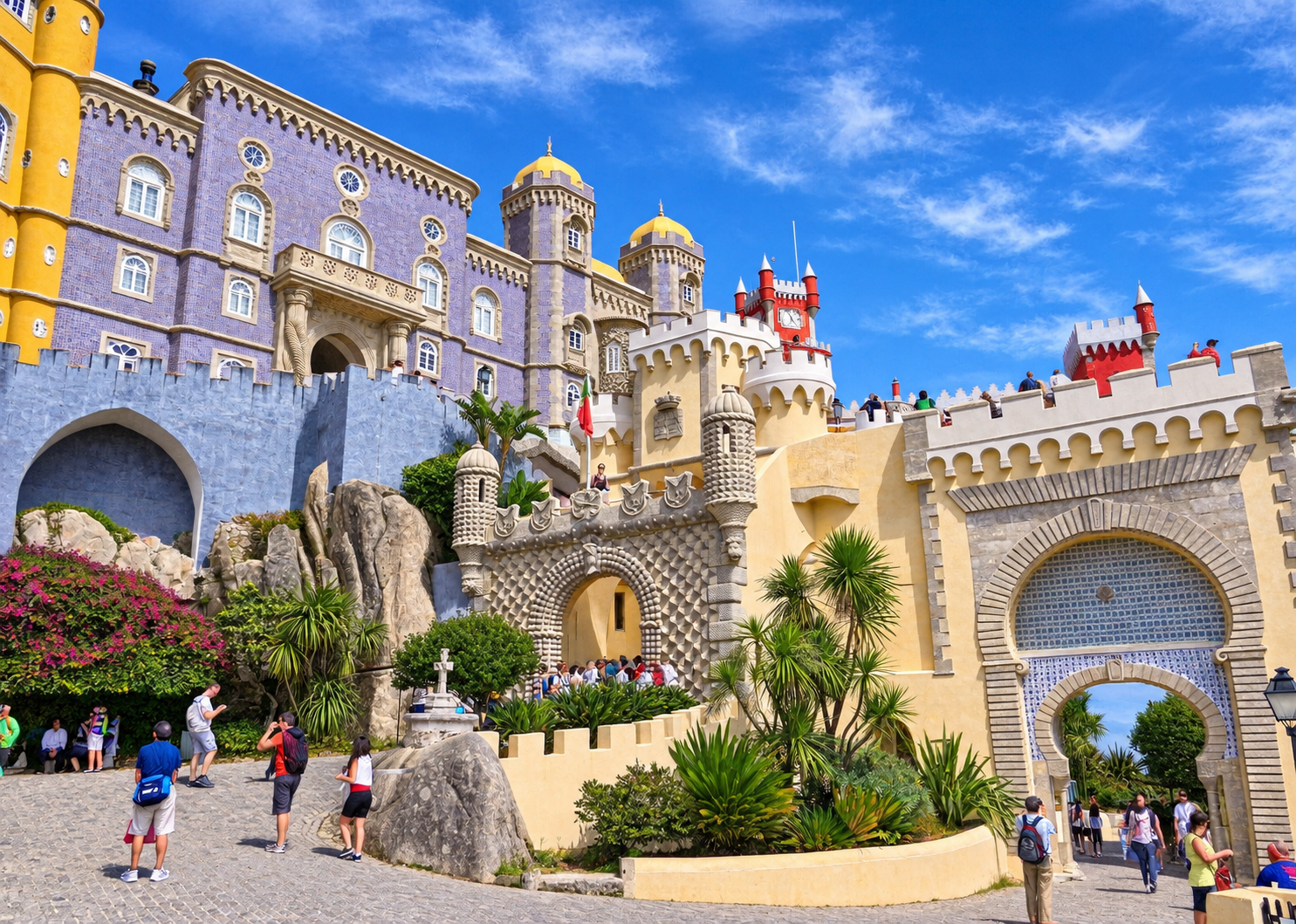
Pena National Palace (August 2015)

Sintra National Palace (August 2015)
Most visitors treat Sintra as a day trip from Lisbon. I would do the opposite.
If your itinerary allows it, spend two or even three days in Sintra. Lisbon is beautiful, but Sintra was ultimately one of the highlights of my time in Portugal. Staying overnight also gives you the opportunity to experience the area after many of the day-trippers have returned to Lisbon.
Azenhas do Mar
While exploring the Sintra region, make time for the coast.
Azenhas do Mar is a tiny seaside village dramatically positioned on cliffs overlooking the Atlantic. Whitewashed houses cascade toward the ocean, creating one of the most picturesque scenes in the region.
It’s an easy addition to a day spent exploring Sintra and a reminder of just how quickly the landscape changes once you leave Lisbon.
Cascais
West of Lisbon is Cascais, a relaxed coastal town that feels very different from the capital despite being nearby.
As a Californian, I found a surprising amount of Portugal familiar—the coastline, climate and laid-back beach towns in particular.
My completely unscientific California comparison: Cascais is Portugal’s Cambria, while Sintra is its Hearst Castle.
It’s not a perfect analogy, but if you’ve driven California’s Central Coast, you’ll understand the feeling.
Where to Eat & Drink in Lisbon
Artis Wine Bar
One of my favorite recommendations came from simply asking the gentleman at my hotel’s front desk where he and his friends would go for drinks on a Friday night.
His answer was Artis Wine Bar.
It turned out to be exactly what I was looking for: cozy, unpretentious and frequented by a mixture of locals and visitors. The food and wine were excellent and, at least during my 2015 visit, remarkably affordable.
Sometimes the best travel planning is simply asking someone who lives there where they’d spend their own Friday night.
Sol e Pesca
Sol e Pesca remains one of the more unusual restaurants I’ve visited.
The restaurant was designed around the character of an old fishing-supply shop, with shelves stacked with colorful tins of preserved seafood. And those cans aren’t merely decoration—they’re essentially the menu.
Anchovies, octopus, clams, mussels, crab and other Portuguese conservas are served simply with accompaniments like bread or crackers, olive oil and a cold beer.
During my visit, you could put together a fantastic afternoon snack for only a few euros.
It was simple, distinctly Portuguese and memorable enough that I still think about it years later.
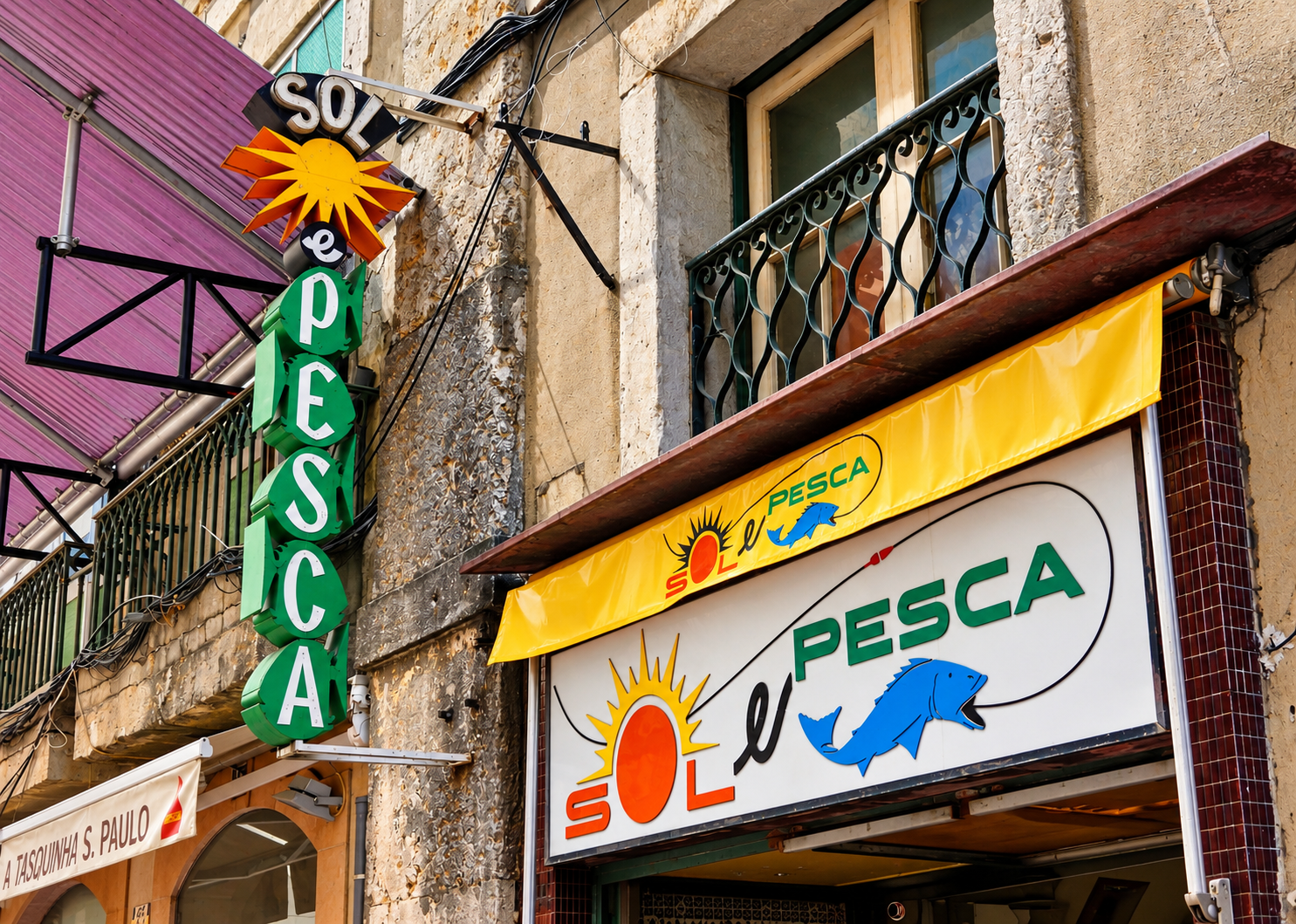
Sol e Pesca (August 2015)
Lisbon After Dark
Listen to Fado at Tasca do Chico
Before visiting Lisbon, I knew almost nothing about Fado.
Given my love of Spanish guitar and Flamenco, however, hearing it live was high on my list once I learned about it.
Fado is distinctly Portuguese, with a sound that’s melancholy, intimate and deeply connected to Lisbon. Comparing it directly with Flamenco doesn’t quite do either tradition justice, but if you’re drawn to emotional, guitar-driven music, there’s a good chance you’ll appreciate both.
Tasca do Chico in Bairro Alto offered exactly the kind of intimate introduction I was hoping for.
Even if you know nothing about Fado before arriving in Portugal, spend one evening listening to it live.
Portuguese Wine at Chafariz do Vinho
I stumbled across Chafariz do Vinho while looking for somewhere to have a drink before dinner. In hindsight, it was one of my luckier finds.
The entrance was understated and easy to miss, while the interior occupied a remarkable historic space associated with Lisbon’s old water system.
The real reason to visit, though, is the wine.
Flights provide an easy introduction to Portuguese wines and Port without requiring you to know much before walking through the door. It’s exactly the kind of pre-dinner activity I love when traveling: distinctly local, educational without feeling educational, and involving a glass of wine.
Oysters Above Lisbon
For a completely different experience, head to the rooftop at Hotel do Chiado.
The terrace offers sweeping views across Lisbon’s rooftops toward São Jorge Castle and is particularly beautiful as the afternoon light begins to fade.
But I’d go back for the oysters alone.
A plate of oysters, a cold drink and São Jorge Castle sitting above Lisbon in the distance is a difficult combination to beat.
Final Thoughts
Lisbon didn’t overwhelm me in the way Paris, London or Madrid did—and I think that’s precisely the point.
It’s smaller, quieter and less frantic. You don’t need to attack Lisbon with a checklist.
Walk uphill. Get lost. Stop for canned seafood and a beer. Drink Portuguese wine before dinner. Listen to Fado in a tiny bar. Watch the sun disappear behind a sea of red rooftops.
And then leave the city for a while.
Because as much as I enjoyed Lisbon, some of my favorite memories from this trip came from the forests and palaces of Sintra and the coastline beyond it.
If I were planning the trip again, I’d spend fewer days treating Lisbon as a traditional European sightseeing destination and more time exploring the region around it.
Lisbon is lovely. Sintra is unforgettable. Together, they’re worth the trip.


